7 Common Mistakes When Foraging and Cooking Wild Chestnuts
Wild chestnuts reward patience more than enthusiasm. A promising basket can turn into a bowl of hard, bitter nuts—or a kitchen clean-up—when a few basics are skipped. The good news is that most chestnut mistakes are easy to see once you know what to look for. They happen at the tree, in the sorting tray, and at the stove: pale nuts taken too early, glossy brown impostors, a sealed bag left in a warm kitchen, a pot of un-scored chestnuts rattling against the lid. Below are the seven errors that show up most often, and the practical habits that prevent them.
The first mistake is often the quietest. Sweet chestnuts should be gathered after they fall naturally from the burr, not pulled from the tree or shaken loose. When a burr opens and a nut drops, it has had time to fill out, cure slightly in the air, and develop the starchy sweetness that makes chestnuts worth the effort. A nut that is still tightly held in a green burr, or one that feels light and pale, will not improve much on your kitchen counter.
A ripe sweet chestnut has a deep mahogany-brown shell, feels firm and heavy for its size, and usually shows a clean, dry base where it separated from the burr. Press a thumbnail into a suspect nut: if the shell gives easily, it is not ready. Gather every few days during the drop, wear gloves for the spiny burrs, and carry a basket or cloth bag rather than a sealed plastic sack. A few pale nuts in a basket can be sorted out; a basket of pale nuts will disappoint.
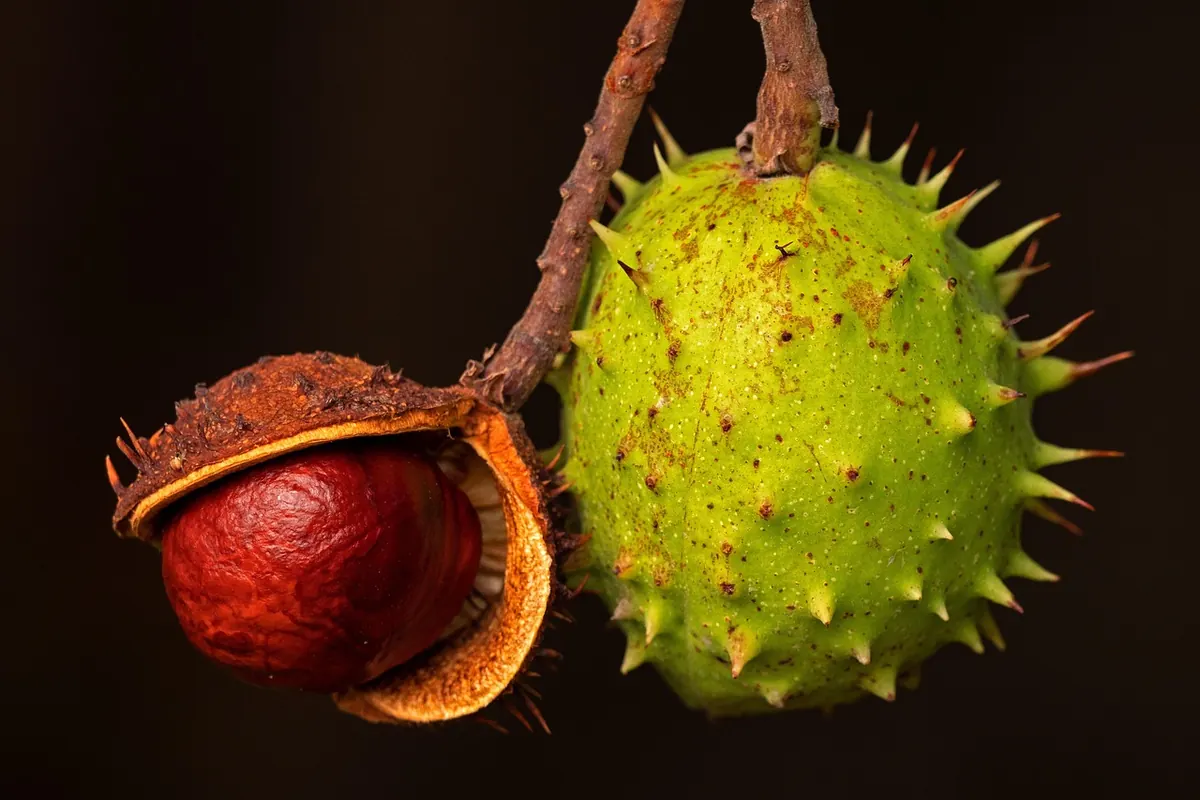
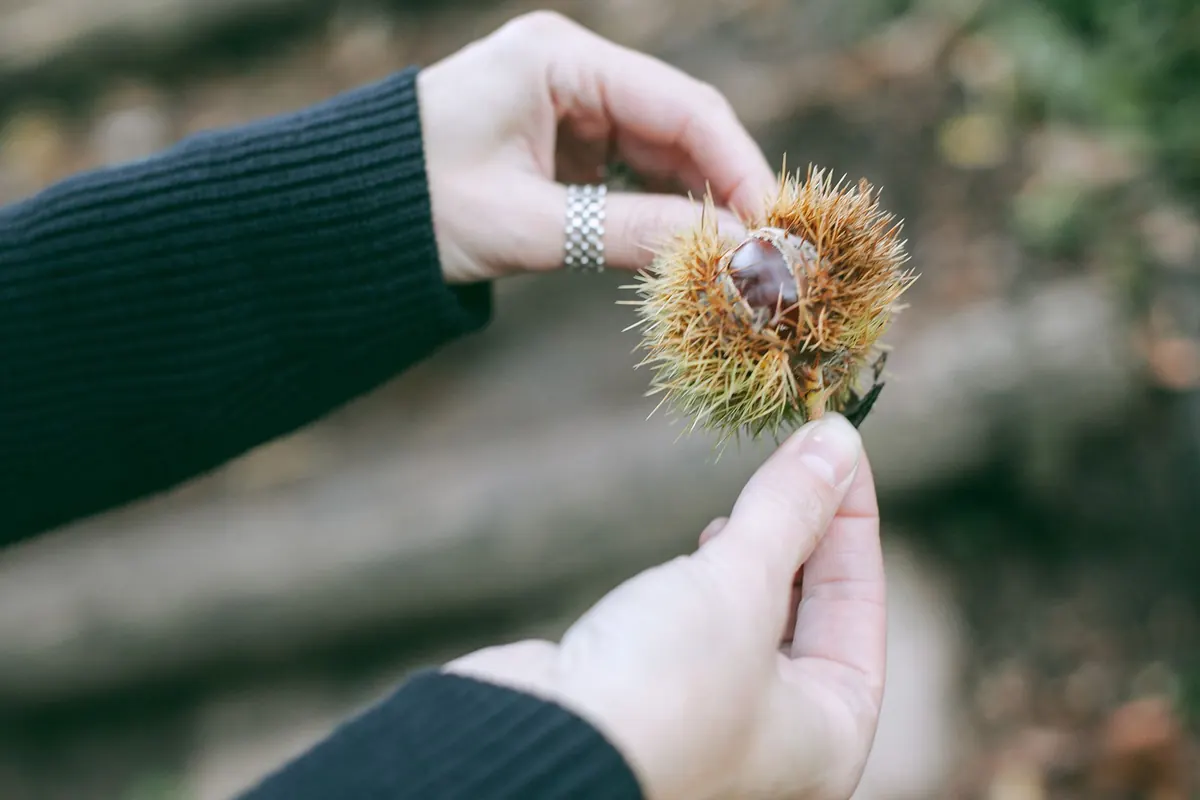
This is the mistake with the sharpest consequences. Horse chestnuts—the glossy brown conkers children collect—are not edible, and roasting them does not make them safe. They are rounder and larger than sweet chestnuts, with a pale circular scar and no pointed tuft. Sweet chestnuts are usually flatter on one side, with a small pointed tip, and they sit inside very spiny burrs. The leaves tell the story too: sweet chestnut leaves are long, simple, and strongly serrated, while horse chestnut leaves are palmately divided into several leaflets.
Do not rely on the nut alone if you are new to foraging. Look at the burr, the leaves, and the tree. If identification is not certain, leave the nuts where they are. A local foraging group, park ranger, or extension service can help confirm what you have found. The rule is simple: no certainty, no cooking pot.
Chestnuts are perishable from the moment they hit the ground. Sort them the same day you gather. Small round holes, fine sawdust-like crumbs, or a nut that feels unusually light are signs of worm damage. Cut a few suspicious nuts open; a hollow center or dark tunnel is reason to discard them. The float test—putting nuts in water and removing those that float—can be a useful clue, but it is not a verdict. Some floaters are simply dry, while some damaged nuts sink.
Mold is less negotiable. Fuzzy patches, black streaks, a sour smell, or a fermenting, alcohol-like odor mean the nut should go out. Do not cut away mold and keep the rest. Fresh chestnuts should smell clean and faintly sweet, like damp earth and starch. A single moldy nut can taint a whole batch, so sort with a bright light and a sharp knife, and compost the rejects away from your clean pile.
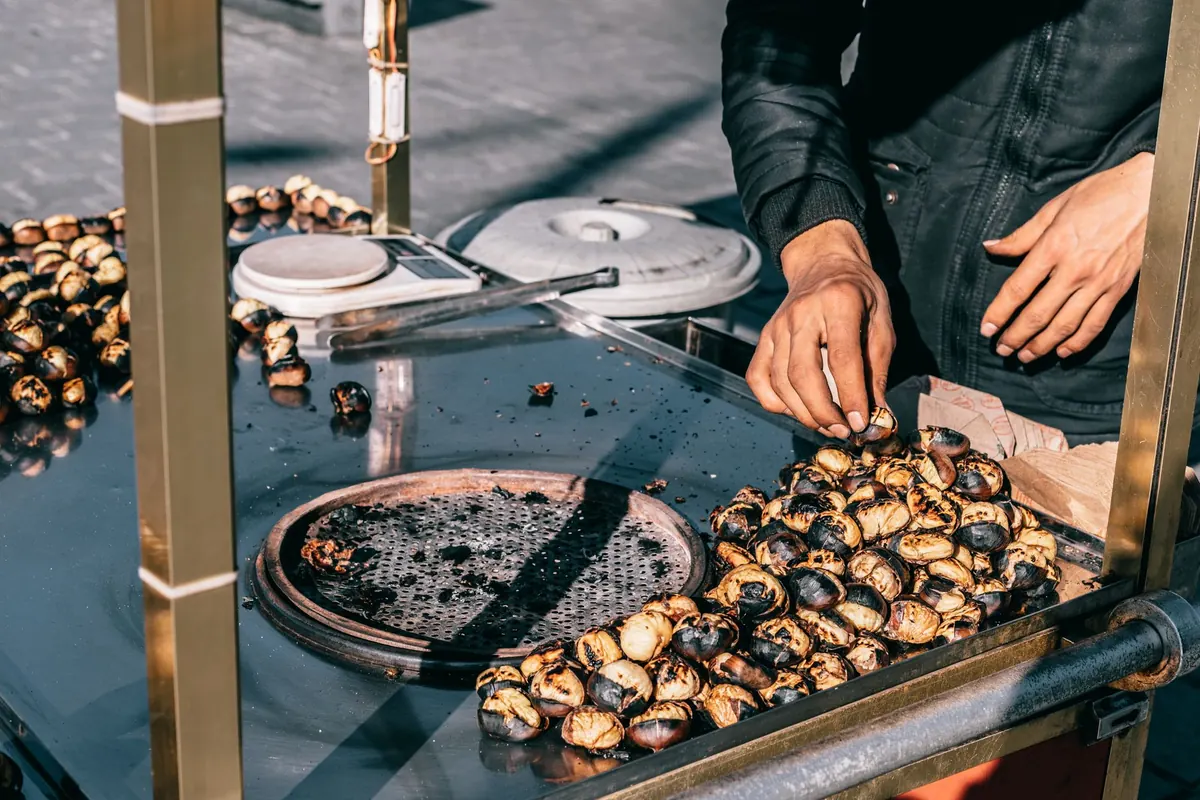
Raw sweet chestnuts are firm, starchy, and unpleasantly astringent; cooking is what makes them sweet and digestible. The second half of this mistake is skipping the score. A whole chestnut heated in a pan or oven can burst, and the inner brown skin—the pellicle—will cling to the flesh like paper. Score each shell deeply across the curved side with a small paring knife before cooking. One clean cut is enough; an X on the flat side also works.
Avoid the shortcut of microwaving whole, un-scored nuts, and do not treat chestnuts like almonds to be eaten raw from the bag. If the flesh is still chalky or resistant after cooking, give it more time. Chestnuts should be soft, sweet, and slightly crumbly, not al dente.
Fresh chestnuts are closer to fresh produce than to pantry almonds. They contain a lot of moisture, and a sealed plastic bag in a warm kitchen is basically a mold chamber. Leave them in a breathable cloth or paper bag in the refrigerator, and check them every day or two. Plan to use them within a week or two of gathering. If you need longer storage, cook and peel them first, then freeze in portions.
Do not pile damp nuts into a deep bucket and forget them. Spread them out in a single layer if you need to hold them overnight, and remove any that soften or smell off. Drying chestnuts properly is possible, but it takes attention; for most home cooks, the refrigerator and freezer are more reliable. Treat fresh chestnuts as a short-season ingredient, not a shelf-stable staple.
A good foraging basket is not a clearance sale. Chestnuts feed wildlife, and the trees need some nuts to regenerate. Take only what you will actually use, leave plenty behind, and avoid breaking branches or stripping burrs from the canopy. Land access rules vary, so check with the landowner or local authority before you fill a bag. A modest harvest that gets used is better than a heavy one that molds in the fridge.
The last common mistake is waiting until the chestnuts are cold to peel them. The inner skin sticks stubbornly as nuts cool, and you end up gouging out chunks of flesh. Peel while they are warm enough to handle, using a towel to rub away the brown skin. If a batch has cooled, reheat briefly or pour boiling water over the nuts for a minute to loosen the pellicle. For chestnuts you plan to freeze, cook and peel first; raw peeled chestnuts do not store well.
Build a simple routine and most of these mistakes disappear. Gather only fallen, dark-brown nuts after checking the tree and burrs. Sort the same day, cutting a few open and discarding anything moldy, wormy, or sour. Score every nut before cooking, cook it thoroughly, and peel while warm. Store what you will not eat soon in the refrigerator in a breathable bag, or cook, peel, and freeze the rest.
If you remember one thing, make it this: fresh chestnuts are a perishable crop, not a dry pantry nut.
That shift in thinking keeps your harvest sweet and your kitchen calm. If you have allergies or digestive concerns, ask a healthcare professional before making chestnuts a regular part of your diet. And when identification is uncertain, leave the nuts for the squirrels—there will be another autumn.
Photo: Maria Orlova / Pexels
Previous Post
Sweet Chestnut vs. Horse Chestnut: A Cook's Identification Guide
Next Post
How to Host a Chestnut Tasting Night: A Beginner's Party Guide